

Service
Air Duct Inspection Dallas TX
Last summer, a homeowner in Lakewood called us because her master bedroom never cooled down, no matter how low she set the thermostat. Her AC unit was fine. The real problem was a crushed flex duct in the attic that nobody had looked at in 15 years. That is exactly what a professional air duct inspection in Dallas is for — finding the problems you cannot see before they show up on your energy bill.
★★★★★ 5.0 · 44 Google reviewsCleaned to NADCA standardsLicensed & insured
Bloom Air Duct Cleaning provides air duct inspection for homes and businesses across Dallas TX. Our technicians use borescope cameras and airflow testing to check every part of your duct system — supply runs, return lines, plenums, boots, and seals. We look for leaks, crushed sections, mold growth, pest damage, and the dust buildup that chokes airflow.
Most Dallas homes lose 20 to 30 percent of their cooled air through duct leaks. In a city where summer electric bills already hurt, that is money blowing straight into your attic. An inspection tells you exactly where your system stands, what needs fixing now, and what can wait.
Central Air Duct Inspection Dallas TX
Central HVAC systems move air through hundreds of feet of ductwork hidden in attics, walls, and crawl spaces. When something goes wrong in there, you feel it as weak airflow, hot rooms, and rising bills — but you cannot see the cause. Our central air duct inspection covers the full path your air travels, from the return grille, through the air handler, and out every supply vent in your home.
We check static pressure, measure airflow at each register, and run a camera through the main trunk lines. In older East Dallas and M Streets homes, we often find original metal ducts with rusted seams and failed tape joints. In newer builds around Lake Highlands, the common problem is flex duct that got kinked or crushed during construction and never caught.
If we find damage, we document it with photos and give you a straight answer on whether air duct repair or sealing makes sense — or whether your ducts are fine and you just need a cleaning.
HVAC Duct Inspection Dallas TX Experts
A good HVAC duct inspection looks at more than the ducts alone. Your ductwork connects to your air handler, evaporator coil, filter housing, and drain pan — and a problem in one spot spreads to the rest. Dirty coils choke airflow. A clogged drain pan feeds mold, and those spores ride your ducts into every room of the house.
Our technicians inspect these connection points on every visit. We check filter fit, since gaps around a filter let dust bypass straight into the coil. We look for microbial growth at the coil and plenum, and we test how your system breathes under load. If buildup is heavy, we can pair the inspection with full HVAC system cleaning in the same visit.
Homeowners ask us all the time: how often should ducts be inspected? For most Dallas homes, every 2 to 3 years is enough. Do it sooner if you just bought the house, finished a renovation, had a pest problem, or smell something musty when the AC kicks on.
Video Duct Camera Inspection Dallas
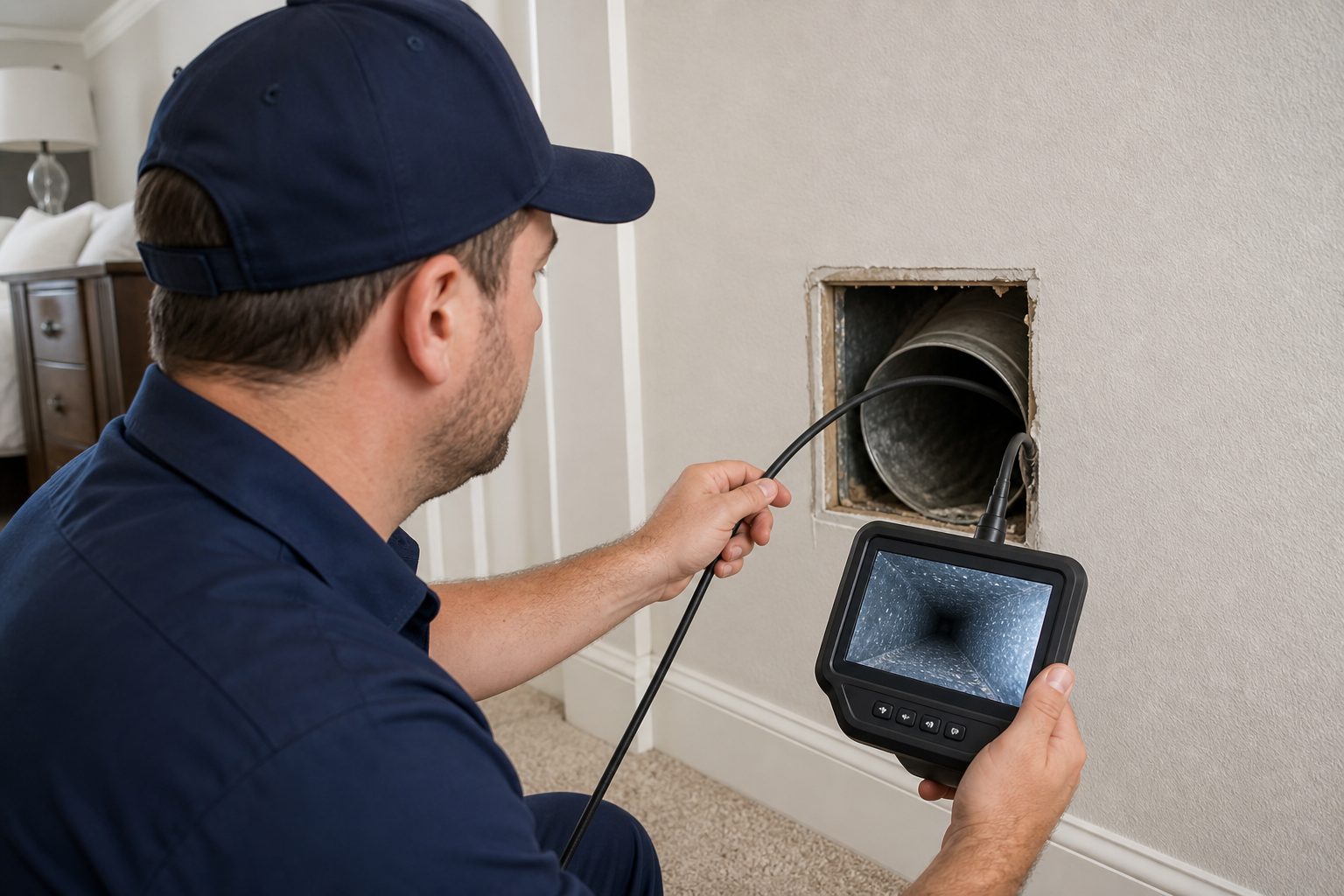
You would not buy a used car without looking under the hood. Same idea with ductwork. Our camera duct inspection puts a borescope inside your duct lines so you can see exactly what is in there, on our screen, in real time.
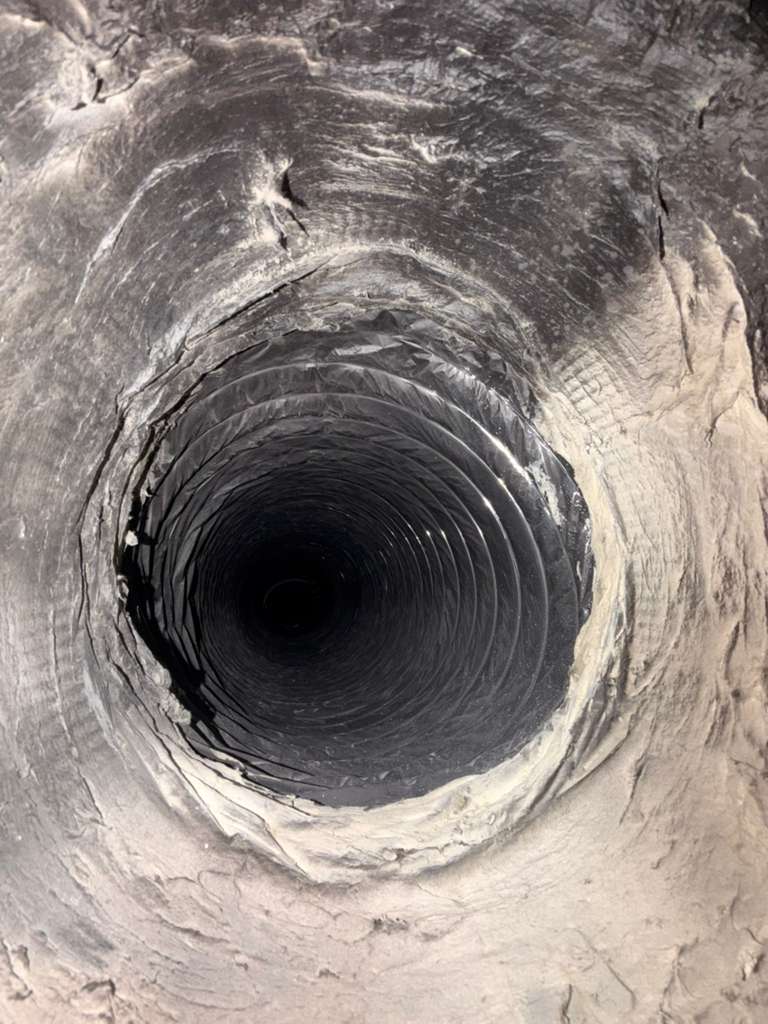
What we find surprises people. Construction debris left from when the house was built. Rodent droppings and nesting material. Mold blooming on the inner liner of flex duct. A half-inch blanket of dust that has been recirculating through the family’s lungs for a decade.
The camera takes the guesswork out. Instead of a salesperson telling you your ducts are probably dirty, you see the actual condition and decide with real information. If the ducts are clean, we tell you that too — and you just saved the cost of a cleaning you did not need. If we spot growth, our duct mold removal team shows you the footage before we quote anything.
Can you inspect HVAC ductwork yourself? You can pull a register and look a foot or two into the run with a flashlight, and you should check the air filter and the visible joints at the furnace and air conditioner for gaps. That is a fair DIY ductwork inspection. What you cannot see is the middle of a 30-foot run, the inside of the return plenum, or the underside of a flex duct sagging across a hot attic — and that is where the problem areas usually are. The video duct inspection is what finds them.
AC Duct Inspection and HVAC Duct Inspection Across Dallas
We are based off Central Expressway and inspect ducts all over Dallas — Lakewood, Preston Hollow, Oak Lawn, Lake Highlands, Casa Linda, and up through the northern suburbs. That matters because Dallas homes have their own patterns. Cottonwood season packs returns and outdoor units with fluff every May. Spring storms push humidity into attics, where flex duct sweats and grows mold. And foundation movement, a Dallas classic, pulls duct joints apart under pier-and-beam homes.
A national call center does not know any of that. Our crews work the same neighborhoods week after week, so we know what to look for before we even open the attic hatch.
Every inspection includes airflow readings, photos of anything we find, and a written summary. No pressure and no scare tactics. About a third of the inspections we run end with “your ducts are in good shape” — and that is a fine outcome.
Homeowners search for this service under a few names — AC duct inspection, air conditioning duct inspection, HVAC duct inspection — and they all mean the same visit. Our duct inspection process starts with a visual inspection of the accessible ductwork, then a video inspection: the inspection camera head travels the supply and return runs into the hard-to-reach areas you cannot see from a register, and everything it finds is recorded. We look for dust and debris, blockage, mold growth from attic condensation, allergen and pest contaminants, and the air leaks at joints and foil-tape seams that let conditioned air escape into the attic. Where the readings point to leaks, a pressure test on the duct system in your home confirms how much air is being lost. The report ties each finding to the efficiency of your HVAC system, so you know which problems are raising your energy bills and which are only cosmetic.
Does ductwork need to be inspected? Yes, but not every year. Our recommendation for Dallas homes is a duct inspection every one to three years, right away after a renovation, a roof or plumbing leak near the ducts, or a pest problem, and before you buy an older home. The inspection is quoted as a flat price before we come out, and the written summary and photos are yours whether or not you book air duct cleaning, duct sealing, or any other work.
Duct Leak Detection, Pressure Test & Airflow Testing Dallas
Duct leaks do not announce themselves. Your system still runs and air still comes out of the vents — just less of it, while the rest dumps into a 140-degree attic. You pay to cool air that never reaches you.
Our airflow testing measures what each register actually delivers compared to what it should. Big gaps point to leaks, crushed runs, or disconnected ducts. We trace them with the camera and by hand, checking the usual failure points: joints sealed with old cloth tape, boots pulling away from ceilings, and connections at the plenum.
If we find leaks, duct sealing is usually a same-week fix that pays for itself. The Department of Energy notes that sealing and insulating attic ductwork is one of the biggest energy upgrades a home can make — and in a Dallas August, you feel it in rooms that finally cool evenly.
Our Duct Inspection Process: Visual Inspection, Then Video Inspection
Here is what a Bloom air duct inspection in Dallas actually covers:
- Supply and return ductwork end to end, with camera footage
- Airflow readings at every register
- Static pressure test on the full system
- Plenum, boots, and joint connections
- Filter housing and filter fit
- Visible mold, moisture, or pest evidence
- Dryer vent condition on request
You get photos and a plain-English summary: what is urgent, what can wait, and what is fine as-is. The visit takes about 45 to 90 minutes depending on the size of the home.
Every technician on our crew runs the same inspection process on every air duct system: a thorough inspection of the accessible duct work first, then the inspection camera into each run so you can see inside the ducts and identify any issues yourself on the screen. The written report covers the condition of your air ducts, the contaminant load we found, air flow readings at each vent, and whether poor indoor air quality or rising energy costs trace back to the duct systems or to the HVAC equipment itself. Regular air duct maintenance from that baseline — sealing the joints that lead to air leaks and heat loss, and professional duct cleaning when the camera shows buildup — is what keeps HVAC efficiency where it should be.
Signs Your Air Duct System Needs an Inspection
You do not need to wait for a schedule if your house is already telling you something is wrong. Call us if you notice:
- Rooms that never match the thermostat, no matter the setting
- Weak airflow from some vents and strong airflow from others
- A musty or dusty smell when the system starts up
- Dust building back up days after you clean
- Energy bills climbing with no change in your usage
- Whistling or rattling sounds from the vents
Any one of these can point to leaks, blockages, or buildup inside the ducts. Two or more usually means it is time to look inside.
Best Air Duct Inspection Service Dallas TX
If you have owned your Dallas home for more than a few years and never had the ducts looked at, an inspection is the cheapest insurance you can buy for your HVAC system. Small problems — a loose joint, a dirty coil, a sagging flex run — cost little to fix today and a lot to fix after they take your system down in July.
Call Bloom Air Duct Cleaning at (469) 517-1229 or request a free quote online. We will show you exactly what is inside your ducts and give you honest answers about what, if anything, needs to be done — and if the cameras show real buildup, our Dallas air duct cleaning service handles it with the same upfront pricing. Most inspections can be scheduled within a few days.
Our inspection checklist aligns with standards from the National Air Duct Cleaners Association.
Fall note: an inspection in early October catches two things before heating season, a musty coil and a disconnected attic run. Both are cheaper to fix now than during a January freeze. See the camera photos from a Southlake inspection that turned into a cleaning, and the process on our air duct cleaning page.
FAQ
Air Duct Inspection questions, answered
How much does air duct cleaning cost in Dallas?
Whole-house specials start at 99 dollars, and deep cleaning runs 35 dollars per duct. Every job gets a written flat-rate quote before work starts.
How long does air duct cleaning take?
Most single-system Dallas homes take 2 to 4 hours. Larger homes or two-system houses take longer, and your written quote includes a time estimate.
How often should air ducts be cleaned in Dallas?
Most Dallas homes benefit from cleaning every 1 to 3 years. Homes with pets, allergies, or recent renovation need it more often.
Do you show proof of what is inside my ducts?
Yes. You see camera footage and photos of your actual ducts before and after the work.
Does my home actually need duct cleaning?
Not every home does. If there is visible dust at the vents, odors when the HVAC runs, or it has been more than three years, it is worth it - and if your ducts do not need cleaning, we tell you.
What equipment do you use?
Negative-air machines, rotary brushes, and HEPA filtration. Deep cleaning uses a Rotobrush system on each individual duct.
Do you clean commercial ductwork?
Yes. We clean ducts in offices, retail spaces, and multi-unit buildings across DFW, scheduled around business hours.
Does duct cleaning help with allergies?
It removes the dust, pollen, and pet dander stored in your ductwork, which reduces the irritants recirculating through the home.
What areas do you serve?
Dallas, Fort Worth, Colleyville, and North Richland Hills, plus surrounding DFW communities.
When is the best time of year for duct cleaning in Dallas?
October, between cooling and heating seasons. The attic is bearable, the system is idle, and the cleaning clears the musty coil smell before the first cold front. Spring is second best, before the AC starts its long run.
Are there hidden fees?
No. The written price you approve is the price you pay. Anything extra, like mold treatment, is quoted separately before any work.
Reviews
Trusted by DFW homeowners
★★★★★
Really happy with the air duct cleaning service. They were on time, professional, and did a thorough job. The whole process was easy and they left everything clean. I’d definitely use them again!
★★★★★
I called Bloom Air Duct Cleaning after moving into an older home. They did a great job cleaning the ductwork and were honest about what was needed. No upselling, just quality work and fair pricing. The whole process was smooth from start to finish.
★★★★★
amazing service. The team was professional on time and very thorough and explained the whole process and showed me before and after pictures of my air duct and I immediately noticed the difference in the air quality highly recommend to anybody in the area.
Free quote
Book your Dallas duct cleaning today
Call for a same-day appointment, or send the form and a real person calls you back. Written flat price, camera photos, no surprises.
Call (469) 517-1229- Open 7 days, 7 AM – 8 PM
- Same-day appointments in Dallas
- Prefer to book online? Pick a time