Dryer Fire Prevention Checklist: How Dallas Homeowners Keep Lint From Starting a Fire
October is Fire Prevention Week, and the clothes dryer is the appliance most Dallas homeowners never think of as a fire risk. The National Fire Protection Association estimates about 13,800 home fires a year involve clothes dryers or washing machines, and failure to clean is the leading factor, behind roughly one-third of dryer fires. The good news is that dryer fire prevention comes down to a short checklist. Here is what our technicians check on every dryer vent cleaning, turned into a list you can work through this month.
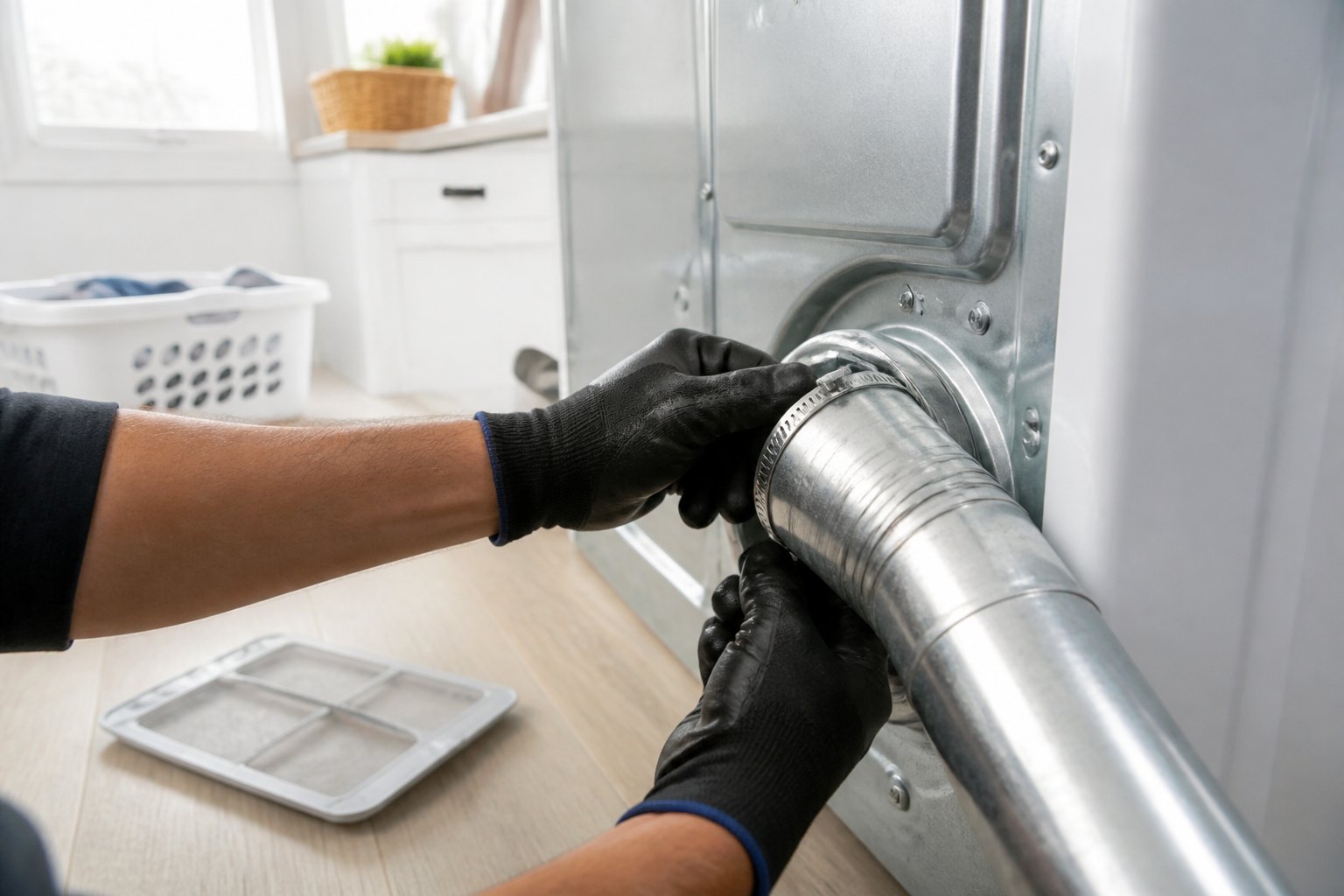
Rigid metal duct with a clamped joint is the safest connection behind a dryer. Plastic and foil accordion ducts trap lint and burn.
What Is the Number One Cause of Dryer Fires?
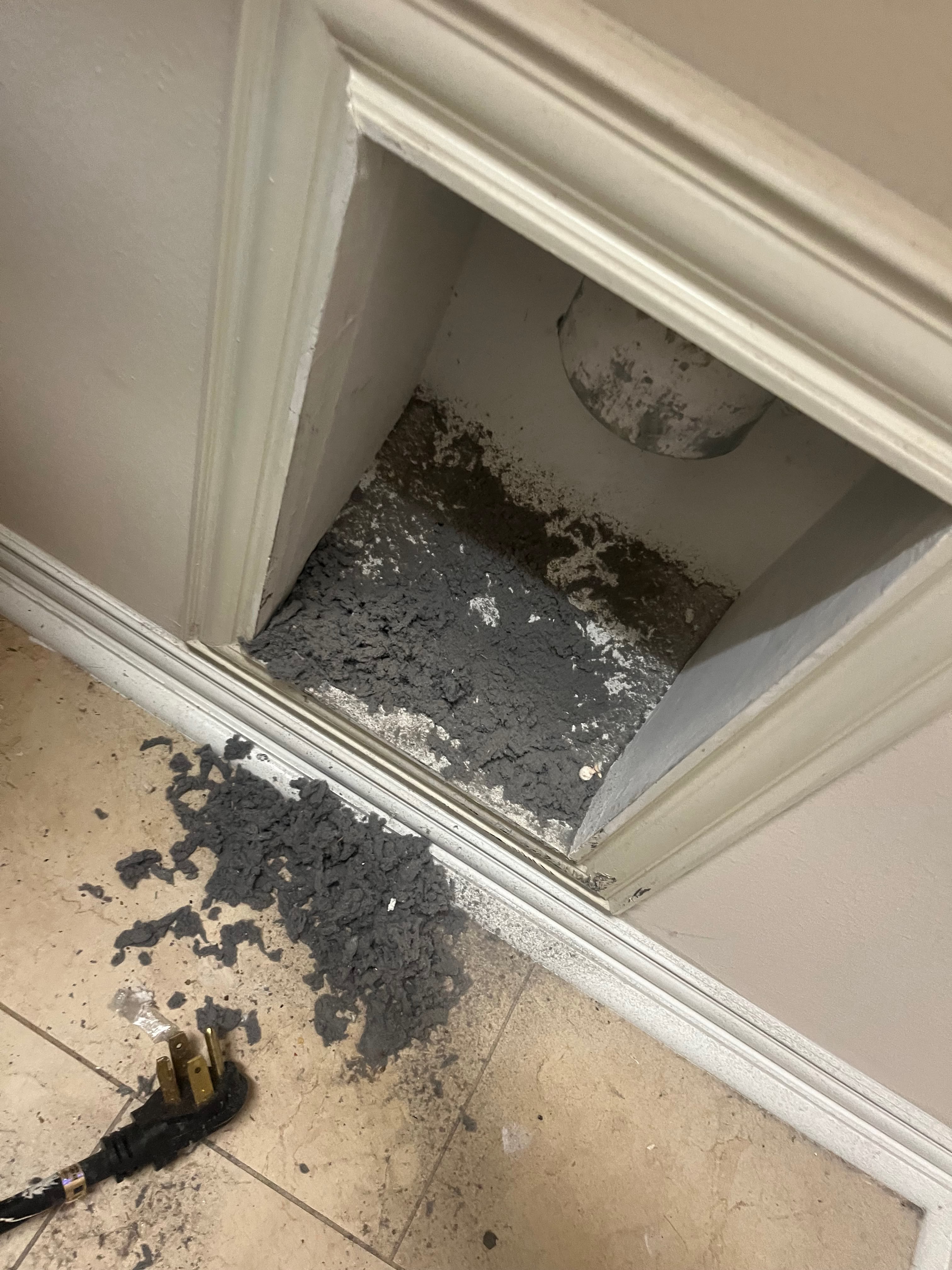
Lint. A clothes dryer pushes hot, moist air through the exhaust vent, and lint that escapes the lint filter collects in the duct, especially at bends and joints. When enough lint restricts the exhaust, the dryer runs hotter and longer, and lint sitting against a hot dryer or a heating element ignites. Both the NFPA and the U.S. Fire Administration list failure to clean as the leading factor contributing to dryer fires, ahead of mechanical failure and electrical failure.
Clothes Dryer Fire Safety Tips: The Prevention Checklist
Fire departments and the Consumer Product Safety Commission publish the same dryer safety advice every year, and it works because a clothes dryer fire almost always starts with lint buildup that restricts airflow. The checklist below groups those safety tips by how often each one needs to happen.
Every load
- Clean the lint filter before or after every load. A full lint screen sends more lint into the duct and makes the dryer run hot.
- Do not overload. Overstuffed drums dry slower and shed more lint.
Every month
- Vacuum the lint trap housing. Pull the lint screen out and vacuum the slot it sits in. Lint packs into that cavity above the heating element.
- Check the exterior vent flap. Run the dryer and go outside. The flap should open and you should feel strong exhaust air. Weak air or a flap that does not move means the exhaust duct may be blocked.
- Keep the area around the dryer clear. No laundry baskets, cleaning supplies, or combustible materials behind or beside it. Never store gasoline or other volatile chemicals in the laundry room.
Every year
- Have the full dryer vent system cleaned from the dryer to the exterior vent by a professional, or every six months with heavy dryer use, pets, or a long attic run. Our dryer vent cleaning starts at $79 and includes the exterior cap.
- Inspect the duct material. If the vent behind your dryer is white plastic or thin foil accordion duct, replace it with rigid or semi-rigid metal duct. Plastic and foil are flammable, sag, and trap lint in every ridge.
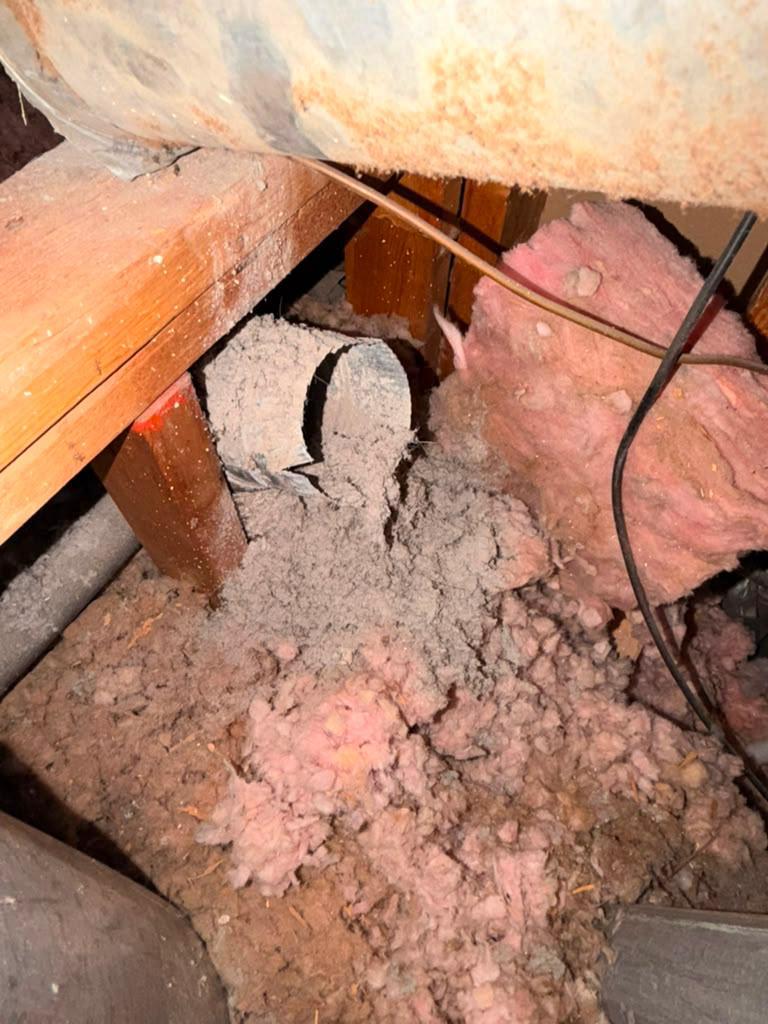
- Check for a disconnected duct. Pull the dryer out and confirm the transition duct is clamped at both ends. A duct that has come apart dumps lint behind the wall or into the attic. We found exactly that in a Lakewood attic this year.
- Gas dryers: have the gas line and connection inspected by a qualified professional for leaks.
Always
- Do not run the dryer while you sleep or leave the house. Most dryer fires start during operation.
- Never dry items that touched flammable substances such as gasoline, cooking oils, paint thinner, or cleaning agents, even after washing. Hang them outside. This applies to electric dryers as much as gas.
- Read the manufacturer’s cool-down instructions and let the cycle finish rather than stopping it early, so hot clothes are not left in a pile.
Warning Signs of Lint Buildup and a Blocked Dryer Vent
- Clothes are taking longer than normal, often two cycles, to dry.
- The dryer or the laundry room feels hot to the touch or humid during a cycle.
- A burning smell while the dryer runs.
- Lint collecting around the door seal or behind the dryer.
- The exterior vent flap does not open, or no exhaust air comes out.
- Lint visible at the outdoor vent or on the roof cap, or a blockage you can see when the flap is open.
Any one of these means stop using the dryer until the vent is inspected. Our post on signs your dryer vent is clogged covers each in detail.
What Type of Dryer Ducting Material Is Safest?
Rigid galvanized or aluminum metal duct is the standard, with joints secured by foil tape or clamps, not screws, which catch lint. Semi-rigid flexible metal is acceptable for the short transition between the dryer and the wall, as long as it is not crushed behind the appliance and proper airflow is confirmed with the dryer running. Plastic and thin foil ducts are not safe for a clothes dryer and are no longer permitted for new installations under most building codes. Keep the total run as short and straight as possible; every 90-degree elbow counts against the maximum allowed length.
What Percentage of House Fires Are Caused by Dryers?
Dryers and washers account for a few percent of all home structure fires, but they are one of the most preventable categories. The U.S. Fire Administration counts about 2,900 residential clothes dryer fires a year, with an average of 5 deaths, 100 civilian injuries, and $35 million in property damage, and most of them trace back to lint that was never removed.
Why Put a Ball of Aluminum Foil in the Dryer?
This is an internet tip for reducing static cling, not a fire-safety practice. It has nothing to do with dryer fire prevention, and it does not replace cleaning the lint filter or the vent.
What Should I Do if My Dryer Catches Fire?
Get everyone out and call 911. Do not open the dryer door, which feeds oxygen to the fire. If you can do so safely, shut off the power at the breaker or the gas at the valve. Do not try to move the dryer. Once the fire department has cleared the home, do not use the dryer again until the vent, the transition duct, and the appliance itself have been inspected.
Dryer Fire Safety in Dallas Homes
Dallas laundry rooms have a specific risk: many dryers sit in the middle of the house with a long vent run through a hot attic to a roof cap, which is the hardest configuration to keep clean and the easiest to lose a connection on. Clothes dryer safety is not complicated, but it is easy to put off. Bloom Air Duct Cleaning inspects and cleans dryer vent systems and exhaust ducts across Dallas, Fort Worth, Colleyville, and North Richland Hills, and repairs disconnected or plastic ducts when we find them. If it has been more than a year, call (469) 517-1229 and check the dryer off your fire-prevention list.