Does Air Duct Cleaning Help With Allergies? A Dallas Guide Before Cedar Fever Season
Every December, Dallas allergy sufferers start a two-month fight with cedar fever, the pollen from Ashe juniper trees that blows up from the Hill Country and settles over North Texas until February. Ragweed comes before it in the fall and oak follows it in spring. Windows stay shut, the HVAC system runs all day, and whatever is inside the ductwork gets pushed through every room on a loop. Does air duct cleaning help with allergies? It helps with one specific piece of the problem, and this post explains which piece, what it will not do, and when to schedule it so it pays off during cedar season.
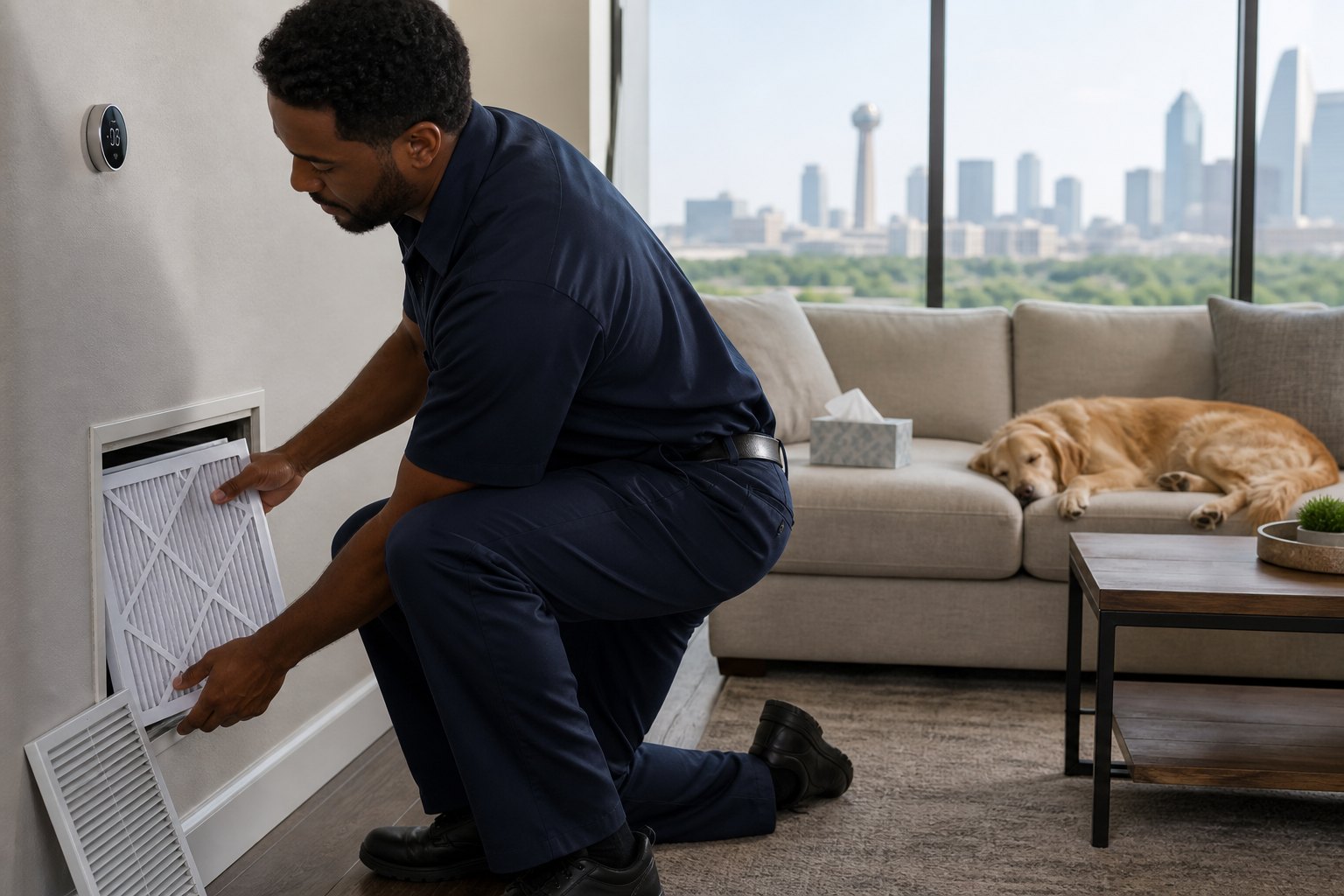
Clean ducts plus the right filter keep indoor allergen levels down when the windows stay closed all winter.
Does Getting Your Ducts Cleaned Help With Allergies?
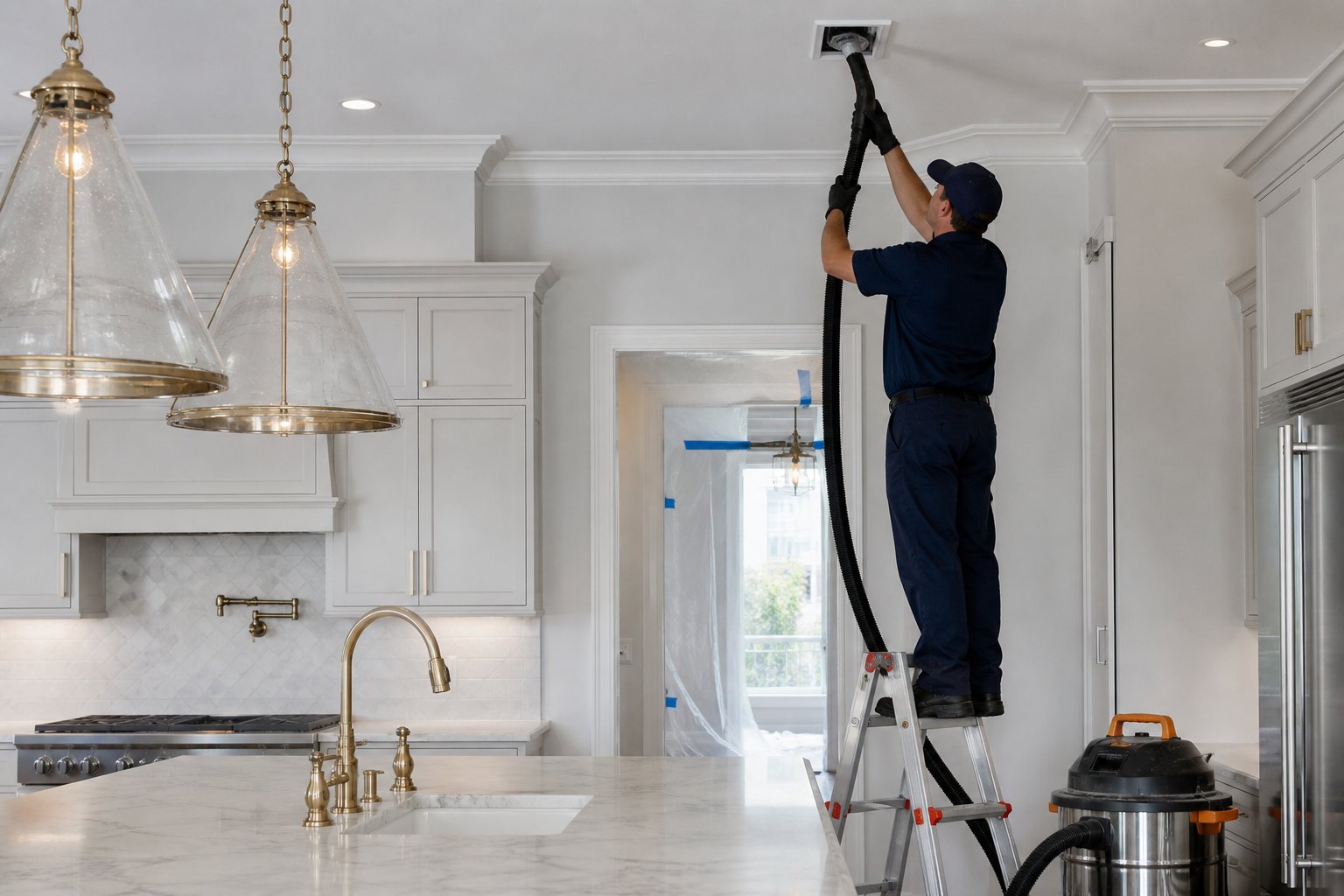
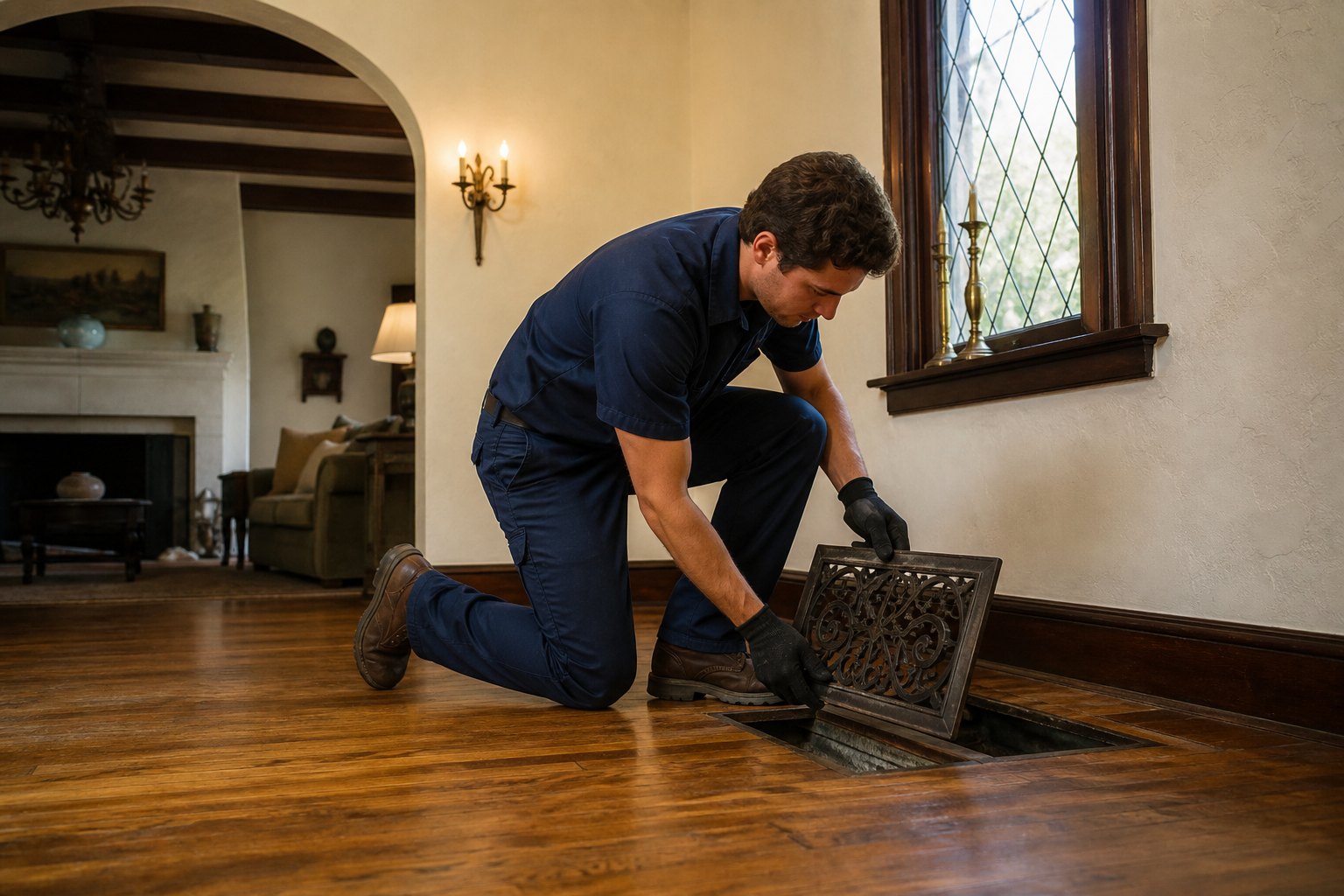
Professional air duct cleaning removes the allergens that have already collected inside the duct system: dust, pollen that came in through leaky returns and open doors, pet dander, insect fragments, and mold spores. Those contaminants circulate through the living space every time the blower runs. Removing them lowers the amount of allergen in the air you breathe indoors. Most homeowners with indoor allergies notice fewer allergy symptoms, less sneezing and fewer itchy eyes in the morning, and less dust settling on furniture within a week or two of a thorough cleaning. Dirty air ducts do not cause allergic reactions on their own; they keep feeding the airborne contaminants that do.
What duct cleaning does not do is act as a cure for allergies or stop new pollen from coming in through open doors and windows. The EPA’s guidance is honest about this: there is no proof that routine duct cleaning prevents health problems, and it recommends cleaning when ducts are visibly contaminated. Our position is the same. If a camera inspection shows clean ducts, we tell you to keep your money. If it shows a coat of dust, dander, and pollen, cleaning them is the fastest way to reduce indoor allergens.
What Common Allergy Triggers Are Found in Air Ducts?
- Pollen. Cedar, oak, ragweed, and grass pollen tracked in on clothes and pets or pulled through gaps in return ductwork.
- Pet dander. Skin flakes and hair from dogs and cats, which coat the inside of supply and return runs in pet households.
- Dust mite debris. Dust mites live in dust; their waste is one of the most common indoor allergens.
- Mold spores. Dallas humidity plus a sweating evaporator coil grows mold in the air handler and nearby ductwork, and the spores spread through the whole house.
- Insect and rodent debris. Cockroach and rodent allergens are common in ducts that run through attics and crawl spaces.
- Construction dust. Drywall and sawdust from past remodels, still in the ducts years later.
A camera inspection shows exactly which of these your duct system is holding. The photos are part of every Bloom cleaning.
How Air Duct Cleaning Helps Reduce Allergy Symptoms, and What Else It Takes
Cleaning the air ducts resets the heating or cooling system to clean, and the airflow improvement alone means the air filters catch more of what is airborne. But the duct walls stay clean only as long as the rest of the setup does its job. Three other steps keep it that way through allergy season:
- Upgrade the air filters. A MERV 11 to 13 pleated filter captures pollen and dander that a fiberglass filter passes straight through. Change it monthly during cedar season. Check that your system’s blower can handle the higher rating; the technician can confirm this during the cleaning.
- Seal the returns. Leaky return ductwork pulls attic air, and attic dust, into the system between filter changes. Duct sealing closes that path.
- Control humidity. Keep indoor humidity under 50 percent so mold and dust mites cannot thrive. Dallas winters are dry enough that this mostly takes care of itself, but a coil that never fully dries is the exception.
Our post on improving indoor air quality in Dallas homes ranks these fixes by cost.
Removing Contaminants From the Ductwork, Then Sanitizing
For households with severe allergies or asthma, or where the inspection found mold growth, we follow cleaning with air vent sanitization, an EPA-registered treatment applied to the cleaned duct surfaces. Sanitizing is not a substitute for removing the debris first; applied to dirty ducts it just coats the dust. Done after a proper cleaning, it addresses the microbial side of the allergen load.
Two related services fit the same visit. Dryer vent cleaning removes lint that would otherwise become airborne fiber in the laundry area, and a coil cleaning removes the mold source inside the air handler. Homeowners with seasonal allergies who book the air duct cleaning service in the fall usually add both, because the cleaning service is already on site with the equipment and the incremental cost is small.
When Is the Best Time to Clean Air Ducts for Allergy Relief?
Before the season you react to, not during it. For cedar fever, that means October or November. For spring oak and grass pollen, February. Cleaning in October also clears the ducts before the furnace runs, which removes the burning-dust smell on the first cold night. If you are already in the middle of a bad season, cleaning still helps, since it removes the pollen the system has been recirculating for weeks.
How Often Should You Clean Air Ducts to Prevent Allergies?
Professional duct cleaning every two to three years for a household with allergy sufferers or pets, versus the three to five years we recommend otherwise. Sooner after a renovation, a pest problem, or any water leak near the ductwork. Between cleanings, the filter does the work, so the monthly filter change matters more than anything else on this list.
Frequently Asked Questions
What is the average cost to clean air ducts?
Bloom’s whole-house air duct cleaning starts at $99. Larger Dallas homes and heavy buildup run $300 to $700; heavy contamination may call for deep cleaning at $35 per duct. Our Dallas duct cleaning cost guide lists what moves the price.
What are the downsides to air duct cleaning?
Poorly done cleaning can release more dust into the home than it removes and can damage fiberglass duct board. Proper cleaning keeps the duct system under negative pressure the whole time, so loosened contaminants go into the collection unit, not your living room.
Does your house get dusty after air duct cleaning?
Not when the job is done with containment. A dusty house afterward means the crew agitated the ducts without a negative-air vacuum running.
Will duct cleaning help my child’s asthma?
It reduces the allergens and irritants circulating indoors, which many families find reduces symptoms. It is not a medical treatment, and it works best alongside the filter and humidity steps above. Ask your allergist which indoor triggers matter most for your child, then test the air; our indoor air quality testing measures dust, humidity, and duct contamination before and after.
Air Duct Cleaning for Allergies in Dallas
Bloom Air Duct Cleaning inspects and cleans air ducts for allergy households across Dallas, from Lakewood and Lake Highlands to the Park Cities and Preston Hollow, plus Fort Worth, Colleyville, and North Richland Hills. Every job starts with camera photos of what is in your ducts and ends with photos of the result. To get ahead of cedar season, call (469) 517-1229 or request a quote online.