Air Duct Cleaning in Older Homes: What Dallas's 1920s–1940s Houses Hide in Their Ducts
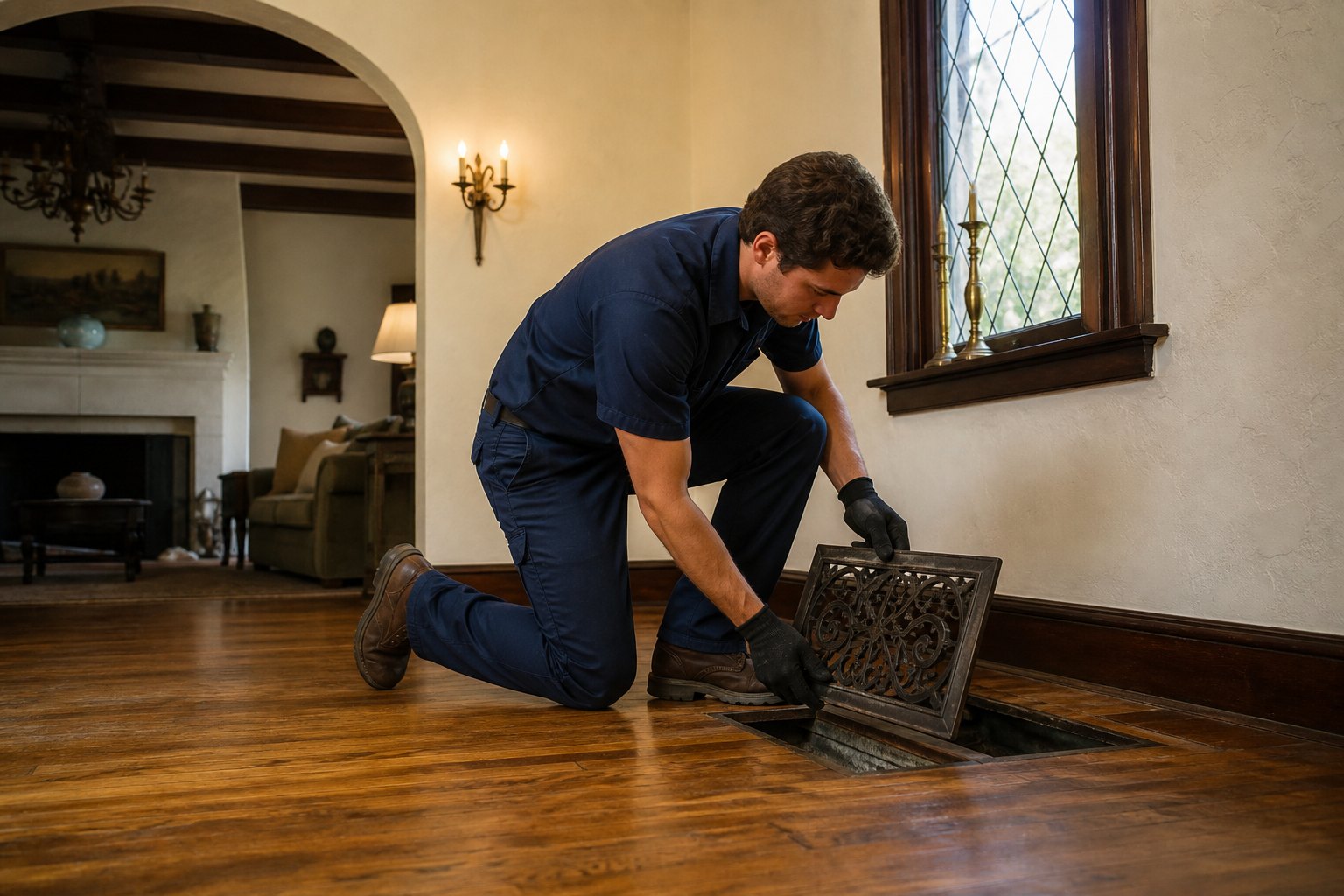
Walk through Lakewood, Munger Place, the M Streets, or Hollywood Heights and you are looking at Tudors and Craftsman bungalows built between the 1920s and the 1940s. Many of them still move air through a duct system that is older than the people living in the house. Bloom Air Duct Cleaning cleans air ducts in these older Dallas homes every week, and what comes out of them is very different from what we pull out of a 2015 build in Frisco. This guide covers what older homes hide in their ductwork, which duct materials you are likely dealing with, and what proper duct cleaning looks like when the house is 90 years old.
Original floor registers in Dallas’s 1920s Tudors often sit on top of the home’s first duct system.
Why Older Homes Need Air Duct Cleaning More Often
A duct system is a closed loop, so anything that gets in stays in until someone removes it. In an older home, four things push contaminants into the ducts faster than in a new one:
- Decades of renovations. Every kitchen remodel, floor refinish, and plaster repair since the Great Depression sent drywall and sawdust into the return vents. Most of it is still in the ductwork.
- Air leaks at every joint. Old sheet metal ducts were sealed with tape that dried out long ago. Gaps pull attic and crawl-space air, insulation fibers, and pests into the system.
- Generations of pets. Pet hair and dander accumulate dust into a thick mat, especially in floor registers.
- Dallas’s seven-month cooling season. The HVAC system runs almost constantly from April to October, so the blower keeps recirculating whatever is in the ducts through your living space.
The Environmental Protection Agency does not recommend cleaning on a fixed schedule. It recommends cleaning when there is visible mold growth, evidence of pests, or ducts clogged with excessive dust and debris. Older homes hit all three triggers far more often than new construction.
Duct Materials in Older Homes and Why They Matter
How your air ducts should be cleaned depends on what they are made of. In older Dallas homes we see four situations.
Original galvanized sheet metal
Homes from the 1920s through the 1950s often kept their first metal duct system, sometimes sized for a gravity furnace that no longer exists. Sheet metal is the best duct material to clean: it is smooth and tough, so brushes and compressed-air tools loosen buildup without damage. The problem is the joints, which leak.
Fiberglass duct board and lined ducts
Common in 1960s to 1980s additions. The porous surface holds dust and cannot be scrubbed hard. A trained cleaning crew uses soft agitation and a vacuum only. Torn or crumbling liner should be replaced, not cleaned.
Flex duct from an attic retrofit
Most older Dallas homes had central air added between the 1980s and the 2000s, usually with flexible duct run through the attic. Flex sags, kinks, and tears, and its ridged inner liner traps heavy dust. The photo below shows what a flex duct in an older home looks like before cleaning.
Suspect asbestos material
Some homes built before 1980 have asbestos-containing tape, paper insulation, or cement duct sections. If our technician sees suspect material during the visual inspection, we stop and tell you. It needs to be tested by a licensed asbestos professional before anyone disturbs it, and duct cleaning is not the right service until that is settled.
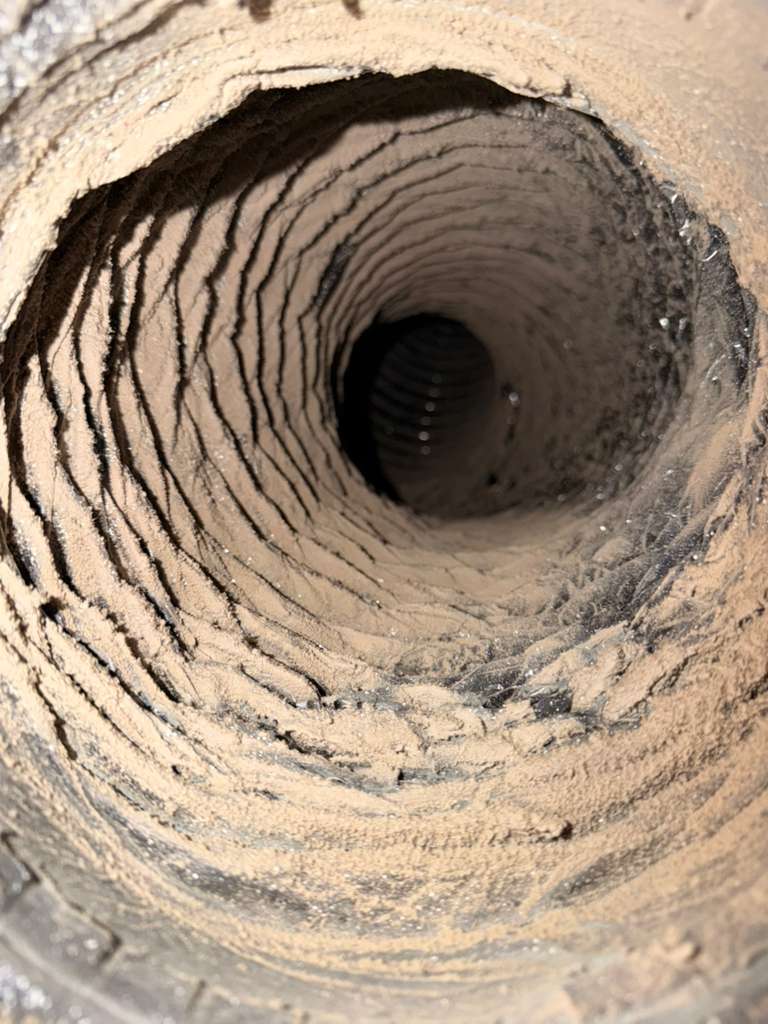
Real job photo: heavy dust buildup inside a flex duct in a Colleyville home before Bloom cleaned it.
What We Find Inside Old Duct Systems
After hundreds of camera inspections in older Dallas homes, the list is consistent:
- Construction dust from every remodel the house has had
- Pet hair and dander packed into supply and return runs
- Cedar and oak pollen that blew in through leaky return boots
- Rodent and insect evidence where a duct runs through the attic or crawl space
- Mold and mildew growth where a duct passes through a damp crawl space or a coil drain once leaked
- Loose insulation pulled in through gaps in the ductwork
- Toys, coins, and debris dropped through floor registers over the decades
- Runs that came disconnected years ago and have been blowing conditioned air into the attic
Any one of these can produce the musty odor, dirty air, and allergy flare-ups that bring people to us in the first place.
Old Home Duct Cleaning: The Proper Cleaning Process
Proper cleaning of an older duct system follows the standards published by the National Air Duct Cleaners Association (NADCA): clean all components of the system, not just the vents you can see.
- Thorough visual inspection. A camera goes into the supply and return ducts first. You see photos of the buildup before any work starts, and we identify the duct materials so the right tools are used on each section. Our air duct inspection also catches disconnected runs and suspect materials.
- Protecting the home. Drop cloths on original hardwood floors, covers on every register.
- Negative-air vacuum on the trunk line. A high-powered vacuum puts the whole duct system under negative pressure so loosened contaminants move toward the collection unit instead of into your rooms.
- Agitation, run by run. Rotating brushes on sheet metal, compressed-air whips on flex, soft tools on duct board. Every supply and return run is worked back to the trunk.
- The rest of the HVAC system. Registers, the blower compartment, and the heating and cooling coils are cleaned so the furnace and air conditioner are not blowing dirt right back into clean air ducts. That is our HVAC system cleaning service.
- Close-up and proof. Access holes are sealed, the air filter is checked for proper fit, and you get after photos of the same spots.
Standard whole-house air duct cleaning at Bloom starts at $99. Heavy buildup in an older home sometimes calls for deep cleaning at $35 per duct instead. The difference is explained in our standard vs. deep cleaning comparison.
Air Leaks: The Old-House Problem Cleaning Alone Will Not Fix
Cleaning removes what is inside the ducts. It does not fix air escaping through them. Older Dallas homes commonly lose 20 to 30 percent of their heated and cooled air through gaps at joints, disconnected boots, and cracked sealant, which shows up as rooms that never even out and energy bills that climb without explanation. If the inspection finds leaks, duct sealing makes the system properly sealed and insulated so the cleaning results last and the air conditioner does not work overtime.
Dryer Vents in Older Homes
Older homes rarely had a laundry room where the dryer sits today. When the laundry moved, the dryer vent was often run up through the attic in a long, bendy path, which is where lint collects and where connections come apart. Bloom Air Duct Cleaning completed a dryer vent cleaning in Lakewood where the duct had separated in the attic and was dumping lint straight into the insulation, a genuine fire hazard.
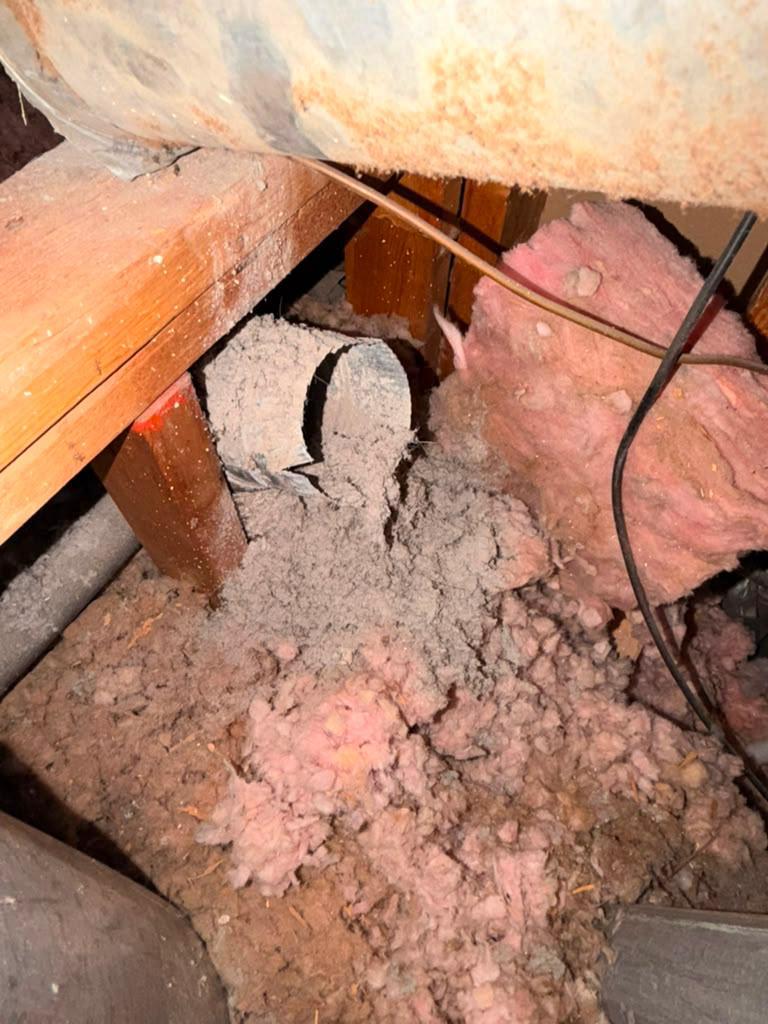
Real job photo: a disconnected dryer vent packed with lint in a Lakewood attic, from our Lakewood project.
If your dryer takes two cycles or the laundry room runs hot, book dryer vent cleaning (from $79) at the same visit as the duct cleaning.
How Often Should an Older Home Have Its Ducts Cleaned?
- Every 3 to 5 years as a baseline for a well-sealed older home.
- After any renovation, even a single room. Construction dust goes straight into the return.
- Every 2 to 3 years with multiple pets or allergy sufferers in the house.
- Right away after a pest problem, a water leak near the ductwork, or visible mold growth at a register.
- Before you move in to an older home you just bought. Start with an inspection; the previous owners’ 30 years of dust should not be your first breath in the house.
Indoor Air Quality Benefits You Will Notice
In an older home, the results of a thorough cleaning are usually obvious within a week: less dust settling on furniture, fewer morning allergy symptoms, no musty smell when the system kicks on, and stronger airflow at the far registers. Because the blower no longer fights a coated duct system, the HVAC system runs shorter cycles, which shows up in lower energy consumption. If you want numbers instead of impressions, our indoor air quality testing measures dust, humidity, and duct contamination before and after.
Common Questions About Duct Cleaning in Older Homes
What are the downsides of air duct cleaning?
Only bad cleaning has downsides. Aggressive brushing can tear fiberglass duct board, and a crew that skips negative-air containment will leave your house dustier than they found it. Ask how the ducts will be inspected and what equipment will be used before you book.
What time of year is best for duct cleaning?
Spring and fall, when the system is not running all day. Fall is ideal for older homes because it also clears the ducts before the furnace kicks on and burns off a summer of dust.
What is the average cost to clean air ducts in an older home?
Bloom’s whole-house special starts at $99. Larger older homes with two systems or heavy buildup typically land in the $300 to $700 range. Our Dallas duct cleaning cost guide breaks down what moves the price.
Does the house get dusty after air duct cleaning?
Not when the duct system is kept under negative pressure during the work. Dust in the house afterward is a sign the crew agitated without containment.
Air Duct Cleaning for Older Homes Across Dallas
Bloom Air Duct Cleaning cleans and inspects duct systems in the older neighborhoods of East Dallas, the Park Cities, and Preston Hollow, along with the rest of Dallas, Fort Worth, Colleyville, and North Richland Hills. See our pages for air duct cleaning in Lakewood, University Park and Highland Park, and Preston Hollow. To schedule a camera inspection or a cleaning, call (469) 517-1229 or request a free quote online.