Why Does My House Smell Musty When the Heat Turns On? A Dallas Guide
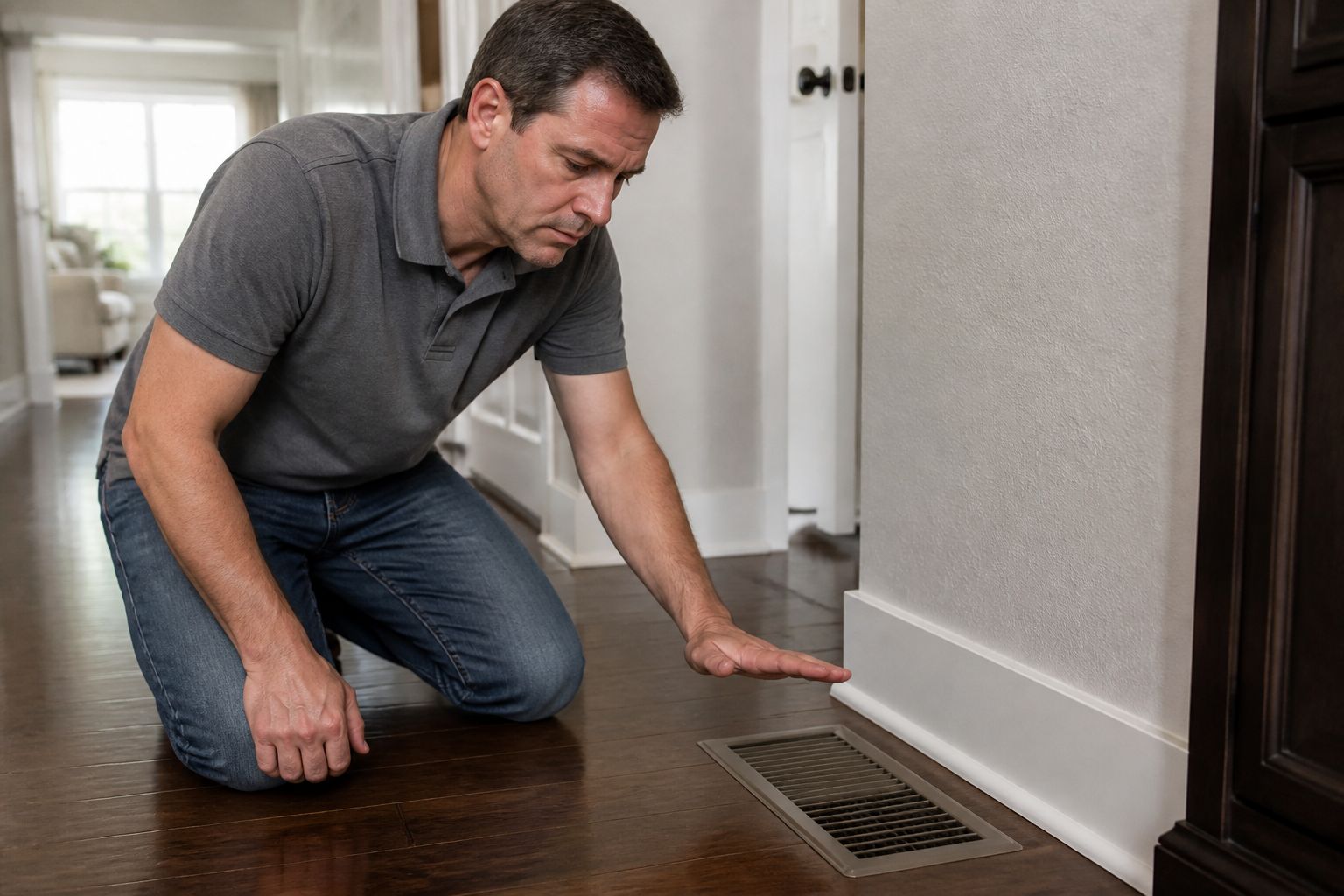
You turn the heat on for the first time in November, and within a minute the house smells like a wet basement. Not smoke, not gas, not the hot-dust smell everyone expects on the first cold morning. Musty. Like a towel left in a gym bag. It fades in an hour, comes back every time the system runs, and by Thanksgiving everyone in the house has stopped noticing it except the guests.
The smell comes out of the supply vents, but it almost never starts there.
A musty smell when the heat turns on is one of the most common calls we get in Dallas between the first cold front and Christmas. It is a different problem from the burning-dust smell, and it has a short list of causes.
Musty Is Not the Same as Burning Dust
Burning dust smells hot and slightly sharp, shows up in the first few minutes of the first heat cycle of the season, and goes away for good after 20 or 30 minutes. That one is normal, and our guide on what a burning-dust smell means explains when it is not.
Musty smells damp and earthy, shows up every time the system runs, and does not fade as the season goes on. That means moisture somewhere in the airflow, and moisture plus dust is how mold gets started. EPA’s mold guidance is blunt about the cause: control the moisture and you control the growth.
Six Reasons a Dallas House Smells Musty When the Heat Comes On
- A coil that ran wet all summer. This is the number one cause here. A Dallas air conditioner pulls water out of the air for six months straight, and the evaporator coil stays damp the whole time. Dust lands on that wet surface and stays. When the furnace finally pushes warm air across it in November, everything the coil collected since April comes through every register at once.
- A drain pan holding water. Under the coil sits a pan and a condensate line. A partly clogged line leaves standing water in the pan all summer. That pan is inches from the airflow.
- Mold growth on the duct walls. Ducts that run through a hot attic sweat where cold air meets humid attic air, especially at joints and where insulation has slipped. We photograph this constantly. On a recent Flower Mound job the camera found a chalky coating along every run in the house.
- A crushed or disconnected return in the attic. A return that has pulled loose stops drawing air from the house and starts drawing it from the attic, along with whatever the attic smells like. If one room is worse than the rest, this is a strong suspect.
- A filter that stayed in too long. A loaded filter holds moisture, and a wet filter smells like a wet filter. Cheap fix, and worth doing before you call anyone.
- A dirty humidifier or a vacant-home slab. Less common, but a whole-house humidifier with a stale pad, or a house that sat empty with the AC off, will do it.
What to Check Yourself First
Three things, in this order, and all three are free:
- Pull the filter. If it is gray, loaded, or damp, replace it and run the system for a day.
- Walk the house with the heat running and smell at each supply vent. If one room is clearly worse, the problem is near that run. If every vent smells the same, the problem is at the equipment.
- Look at the drain line outside and the pan under the indoor unit, if you can reach it safely. Standing water is your answer.
If the smell survives a new filter, it is coming from the coil, the pan, or the ducts, and those need equipment to clean properly.
Air Duct Cleaning for a Musty Smelling House
The fix that actually holds is cleaning the whole path the air takes, not just the ducts. A Bloom air duct cleaning in Dallas starts with a camera inspection so you see what is in there before you spend anything. Then negative air on the trunk lines, agitation through every supply and return run, registers and grilles cleaned, and the blower compartment cleaned out.
When the source is the coil and pan, that is where the visit has to include the equipment. Our HVAC system cleaning covers the coil, blower, and drain pan along with the ductwork, and it is the service that settles a musty smell for good rather than for a week.
Duct Mold Removal and Vent Sanitizing
If the camera shows growth rather than dust, cleaning alone is only half the job. Our duct mold removal service treats the affected runs, and air vent sanitization follows with an EPA-registered product on the cleaned surfaces. We do not sanitize dirty ducts, because a treatment sprayed onto a layer of dust does nothing worth paying for.
Where the growth keeps coming back, the cause is almost always moisture that never got fixed: a sweating duct that needs to be sealed and re-insulated, a return pulling attic air, or a drain line that clogs every summer. Those are repairs, and we quote them separately rather than folding them into a cleaning price.
Indoor Air Quality Testing When Someone in the House Reacts
If the musty smell comes with coughing, a stuffy nose that clears when you leave the house, or an asthma flare that started when the heat did, get numbers before you spend on treatment. Indoor air quality testing tells you what is actually in the air, and our Dallas indoor air quality guide covers the filter, humidity, and ventilation changes that hold the improvement afterward.
Keeping the Smell From Coming Back Next November
- Change the filter every one to three months, and use a MERV 11 to 13 pleated filter if the system can handle it.
- Have the coil and drain pan cleaned once a year, at the same visit as a heating maintenance check.
- Flush the condensate line at the end of cooling season, before the equipment sits.
- Keep indoor humidity under 50 percent. A $15 hygrometer in the hallway tells you where you stand.
- Seal and re-insulate attic duct joints that sweat, so the ducts stop making their own moisture.
Frequently Asked Questions
Why does my house smell musty only when the heat is on?
Because the blower is moving air across a coil, pan, and duct surfaces that stayed damp through a Dallas summer. The smell was always there; heating season is when air starts moving past it again.
Is a musty smell from the vents dangerous?
The smell itself is not, but it points to moisture and possible mold growth, and mold exposure matters for anyone in the house with asthma or allergies. It is worth finding the source rather than covering it.
Will air duct cleaning get rid of the musty smell?
If the source is dust and growth in the ducts, yes. If the source is the coil or a standing-water drain pan, the cleaning has to include the equipment, or the smell returns within days.
Can I just use a vent deodorizer?
It masks the smell for a few days and leaves the moisture and the growth where they are. Fix the source first; a deodorized duct is still a dirty duct.
How much does it cost to fix a musty smell in Dallas?
Basic duct cleaning starts at $99 per HVAC unit and runs $300 to $700 for larger homes or heavier buildup. Our Dallas cost guide breaks down what moves the price, and every job is quoted flat after the inspection.
Find the Source Before You Pay for a Cleaning
Bloom Air Duct Cleaning inspects, photographs, and cleans duct systems across Dallas, including Lakewood, Lake Highlands, East Dallas, University Park, and Preston Hollow, plus Fort Worth, Colleyville, and North Richland Hills. Camera photos first, a flat written price, and an honest answer if your ducts do not need the work. Call (469) 517-1229 or book an inspection before the guests arrive.