Air Duct Cleaning After a Renovation: Why Park Cities Remodels End With Dust in the Ducts
University Park and Highland Park have more remodels per block than almost anywhere in Dallas. Kitchens get opened up, second stories go on, and a good number of older homes come down and go back up as new construction. Every one of those projects leaves the same thing behind: construction dust in the air ducts. The contractor sweeps the floors and wipes the counters, the HVAC system comes back on, and for the next several weeks the house is dusty again every morning. Here is why air duct cleaning after a renovation is on the punch list for Park Cities homeowners, and how to time it.
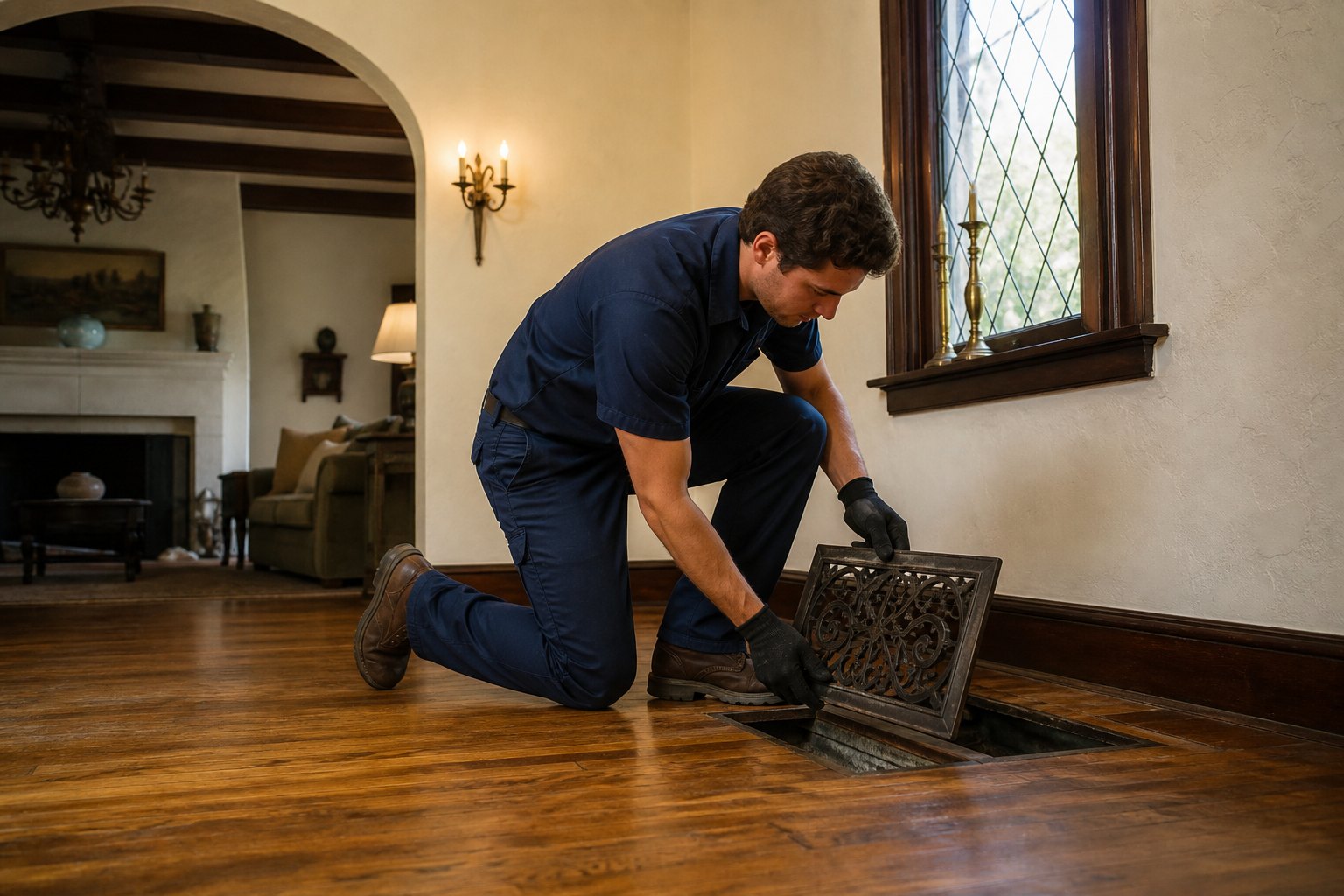
The finish work is done, but the supply and return registers hold weeks of drywall and sanding dust.
Why Is Air Duct Cleaning Necessary After a Renovation?
Construction dust is different from household dust. Drywall dust, sawdust, sand and sanding residue from floors, tile and mortar dust, and insulation fibers are fine particulate matter that stays airborne for hours. Once the crews leave, that renovation dust is still in the return ducts and on every vent. If the heating and cooling system runs during the project, and it usually does in a Dallas summer, the return air pulls those particles into the ductwork every time the blower cycles. They settle on the inside of the ducts, in the air handling unit, and on the evaporator coil.
When the project ends and the family moves back in, the HVAC system keeps redistributing that dust through every supply register for weeks. That is the fine white film on furniture after a remodel. It is also why post-construction indoor air quality is often worse than before the work started, even though the house is brand new.
What Happens if Construction Dust Is Left in the Air Ducts?
- The dust keeps coming back. Wiping surfaces does nothing while the reservoir is in the ducts.
- The coil and blower clog. Drywall dust on a wet evaporator coil turns into a paste that cuts airflow and cooling capacity. On a new system, that shortens its life from day one.
- Filters load in days. A new pleated furnace filter can go grey in a week after a remodel.
- Fine particles reach the lungs. Silica from tile and mortar and gypsum from drywall are respiratory irritants, which matters most for children, older adults, and anyone with asthma.
- New ductwork gets contaminated too. Even when a renovation includes a new duct system, the ducts are open during construction and collect debris before the registers are installed.
What Is the Best Time to Clean Air Ducts After a Renovation?
After the last dust-producing step and before the final clean. In practice that means after floors are sanded and finished, after paint, and after the contractor’s construction cleaning, but before your own move-back cleaning. If you clean the ducts while a trade is still sanding, the ducts refill. Ask the contractor to cover supply and return registers during the work and to run the HVAC system as little as possible; both cut the amount that ends up inside the duct system.
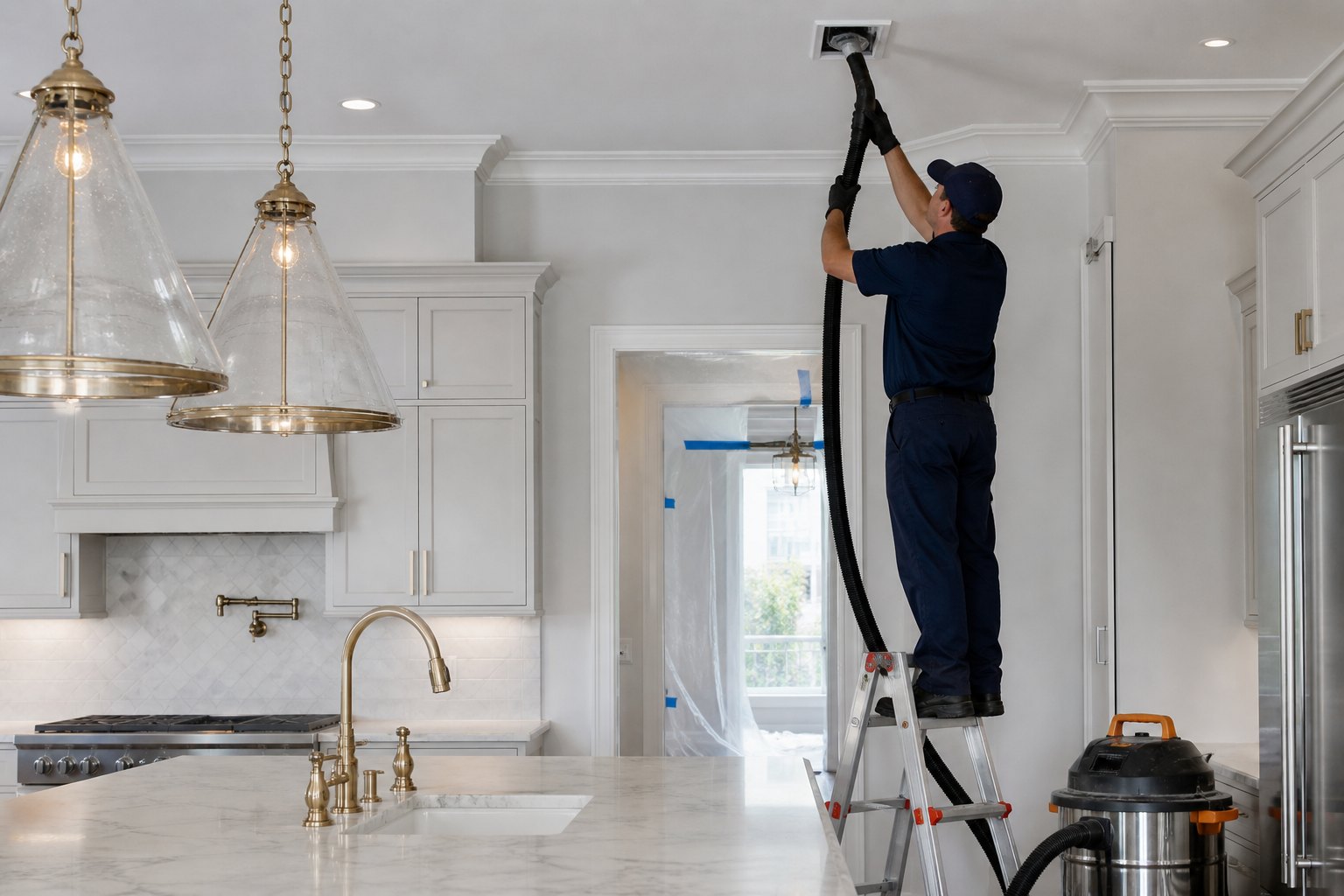
The cleaning itself follows the standards of the National Air Duct Cleaners Association (NADCA): a camera inspection of the supply and return runs, the whole duct system put under negative pressure with a truck- or portable-mounted vacuum, agitation of each run to loosen construction debris, and cleaning of the registers, blower, and coil. On a post-construction job we usually recommend deep cleaning at $35 per duct rather than the $99 standard special, because sanding dust sticks to the duct surface and needs mechanical agitation to remove. Our standard vs. deep cleaning comparison explains the difference.
Signs Your Ductwork and HVAC System Need Post-Construction Duct Cleaning
- A fine dust film returns on surfaces within a day or two of cleaning.
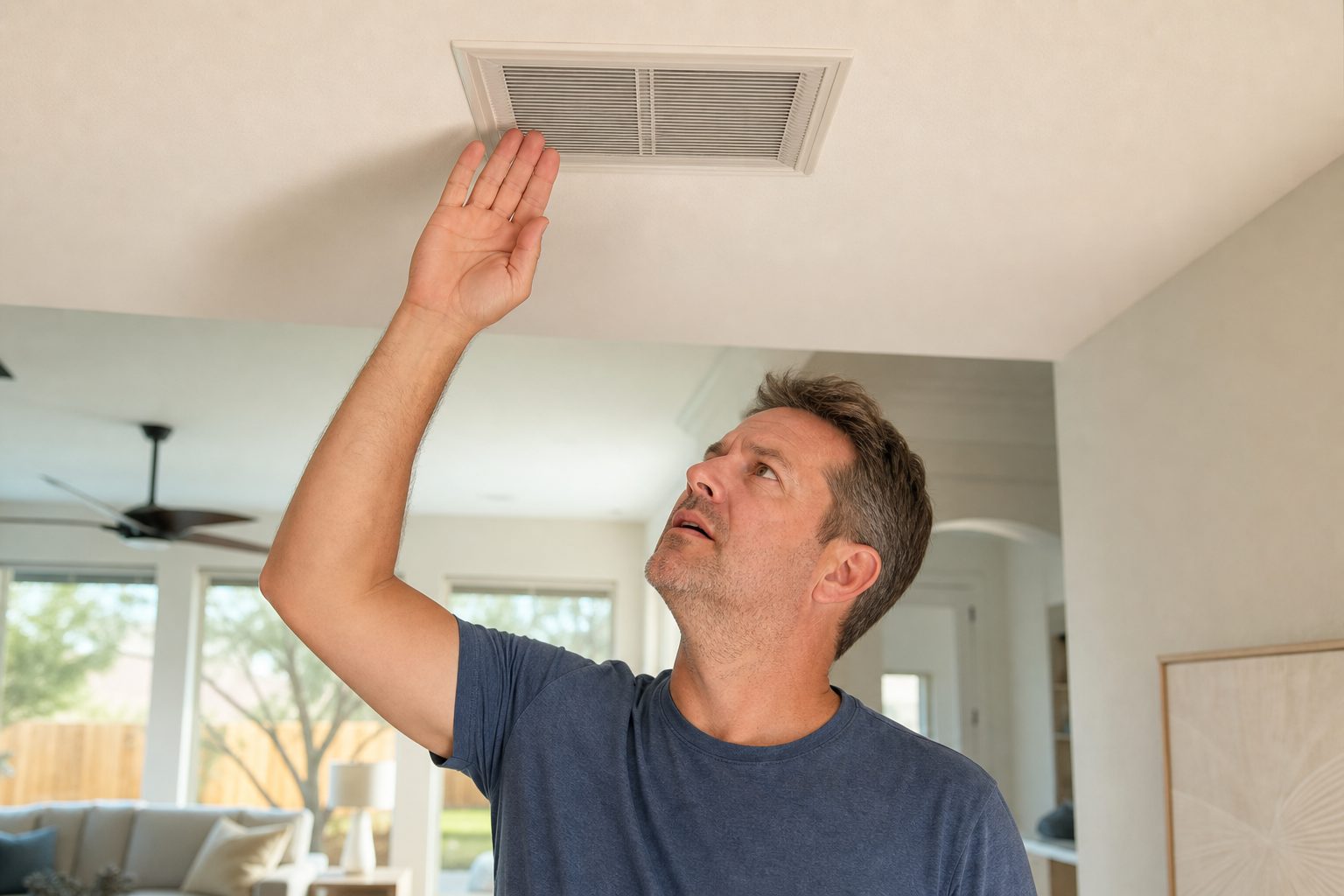
- Visible dust or debris at supply registers or on the return grille.
- A new filter turns grey within a couple of weeks.
- Weaker airflow from the vents than before the project.
- A dusty or musty smell when the system starts.
- Family members with allergies or asthma feel worse in the renovated space.
Can I Clean My Air Ducts Myself After a Renovation?
You can vacuum the registers and change the filter, and you should. You cannot clean the inside of the ducts with a household vacuum. A shop vac at a register reaches a foot or two into the run and stirs up the rest. Professional duct cleaning works because the negative-air machine pulls from the trunk line while agitation tools travel the full length of each run, so loosened dust moves toward the vacuum instead of into the living space.
Keeping the Ducts Clean After the Renovation Is Done
Getting the ducts clean once, thoroughly, right after the work is the main step. After that, keeping them clean is mostly about filters and habits: change the filter monthly for the first three months while the last of the dust and debris shakes out of the duct system, keep air vents uncovered so airflow stays balanced, and have the coil checked at the next AC maintenance visit, since microbial growth on a dust-coated coil is the one problem that shows up months later. Homeowners who do those three things rarely see the dust return.
Then return to a normal schedule of every three to five years, sooner with pets or allergies. A home that has had major construction work and no duct cleaning is one of the most common situations our camera inspections flag, sometimes years later, with sanding dust still coating the duct surface.
Air Duct Cleaning After Renovation in University Park and Highland Park
Park Cities homes add two wrinkles. First, many renovations keep some original ductwork from the 1930s to 1950s while adding new runs, so the technician has to match the cleaning method to sheet metal, duct board, and flexible duct in the same house. Second, teardown-and-rebuild projects on the same block mean neighboring homes get a share of the dust too; if a new build went up next door this year, your return grille probably shows it. Bloom Air Duct Cleaning serves University Park and Highland Park every week, and our post on air duct cleaning in older homes covers what we find in the pre-war houses that were renovated rather than replaced.
Frequently Asked Questions
What is the average cost to clean air ducts after a remodel?
For a Park Cities home, post-construction duct cleaning typically runs $300 to $700 depending on the number of runs and the amount of debris, with the $35-per-duct deep cleaning rate applied to the runs that need it. Every job is quoted flat and in writing after the camera inspection. Our Dallas duct cleaning cost guide has the full breakdown.
Should the contractor pay for it?
Some remodeling contracts include post-construction duct cleaning; many do not. Ask before the project starts and get it added to the scope if it is missing. It is far cheaper as a line item than as a warranty argument later.
Does duct cleaning after construction include the coil and blower?
Ours does when the inspection shows they are coated, which after a renovation is almost always. Cleaning the ducts and leaving a dust-caked coil defeats the purpose. That is the HVAC system cleaning level of service.
To schedule a post-renovation duct cleaning in the Park Cities or anywhere in Dallas, call Bloom Air Duct Cleaning at (469) 517-1229. We work seven days a week, 7:00 AM to 8:00 PM, and every job comes with before-and-after photos and a 100% satisfaction guarantee.