Where Leaks Are Most Likely to Occur in Air Ducts
Air duct leaks are one of the most common causes of high utility bills and uneven temperatures throughout a household. Because the majority of your ventilation system is hidden behind drywall or tucked into attics, these gaps often go unnoticed for years while wasting conditioned air.
Identifying the specific locations where air is escaping is the first step toward restoring the efficiency of your heating and cooling system. By addressing these weak points, you can ensure that the air you pay to treat actually reaches its intended destination.
Vulnerable Joints and Seams
The most frequent site of air leakage is at the junctions where two sections of ductwork meet. Over time, the vibration from the HVAC blower motor can cause these connections to loosen, creating thin gaps that allow significant amounts of air to bleed out.
- Check the longitudinal seams of metal ducts for sections where the factory seal has failed.
- Look for “gray dust” patterns around joints, which often indicate air is being forced through a small opening.
- Inspect the elbow joints where the ductwork turns, as these areas face the highest air pressure.
Securing these connections with high-quality mastic or foil tape is essential for maintaining a pressurized system. A tight seal at every junction ensures that your airflow remains consistent from the furnace to the furthest bedroom.
Poorly Sealed Register Boots
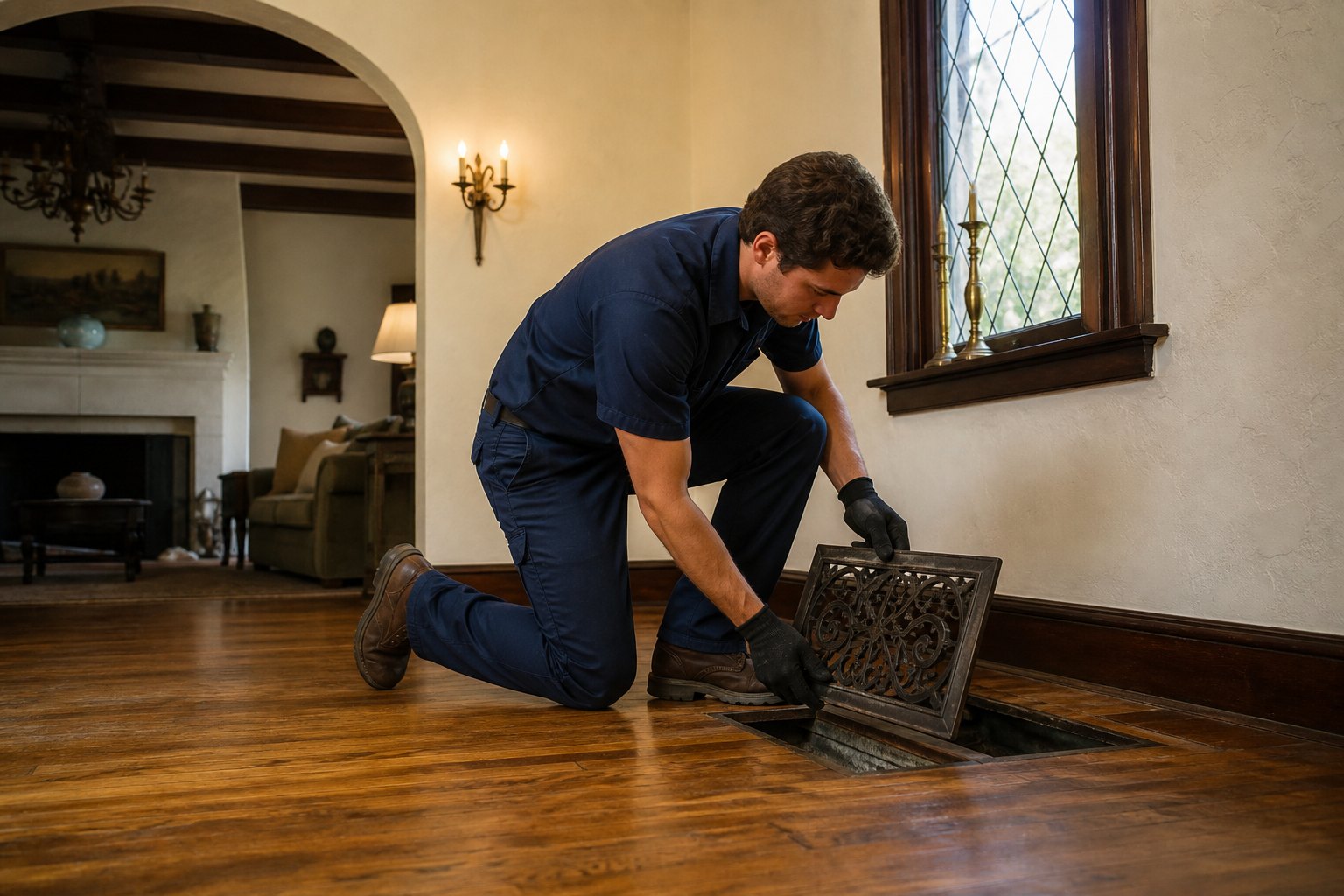
The register boot is the metal transition piece that connects your round or rectangular ductwork to the rectangular vent opening in your floor, wall, or ceiling. If the gap between the boot and the subfloor or drywall is not properly caulked, unconditioned air from the wall cavity can mix with your clean air.
- Remove the vent cover to see if there is a visible gap between the metal boot and the surrounding cutout.
- Feel for air blowing out from the sides of the register rather than through the center of the grille.
- Watch for cobwebs or dust streaks near the edges of the vent, signaling a localized leak.
Sealing this specific interface prevents “short-circuiting,” where your system pulls in dusty air from inside your walls. This simple fix can dramatically improve the cleanliness of the air entering your living spaces.
Disconnected Flexible Ducting
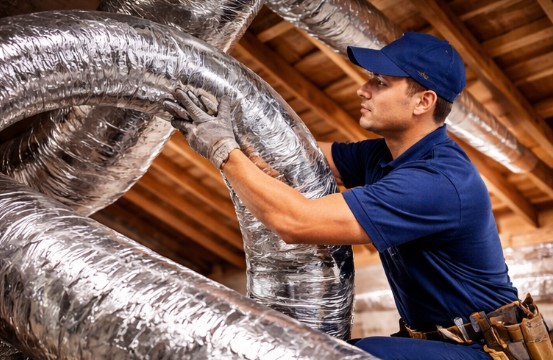
Flexible ducts are often used in attics and crawlspaces because they are easy to maneuver around structural beams, but they are also prone to slipping off their mounting collars. If the plastic zip ties or metal clamps become brittle or loose, a duct can detach entirely, dumping conditioned air into your attic.
- Crawl into your utility spaces to ensure all flexible tubes are still firmly attached to their metal distribution boxes.
- Look for “kinks” or sharp bends that might be putting physical stress on the connection points.
- Verify that the inner liner of the flex duct is still securely fastened under the insulation layer.
Reattaching and properly strapping these ducts ensures that your system doesn’t lose its cooling power to unoccupied areas of the home. Maintaining the physical alignment of these tubes is a key part of seasonal home maintenance.
Leaky Plenum Connections
The plenum is the large distribution box connected directly to your indoor air handler or furnace that directs air into the various branches of the system. Because it is the point of highest pressure, even a small crack or unsealed corner here can result in massive energy loss.
- Inspect the base of the furnace where the main supply and return plenums are attached to the unit.
- Listen for a persistent whistling or hissing sound when the fan is running, which indicates a high-pressure leak.
- Check the tape or sealant at the corners of the box to see if it has dried out or cracked due to heat.
Addressing leaks at the source maximizes the efficiency of your HVAC unit before the air even begins its journey through the house. Keeping this central hub airtight is the most effective way to lower your overall monthly energy consumption.
Deteriorated Duct Insulation and Vapor Barriers
In unconditioned spaces like garages or attics, the insulation surrounding your ducts acts as a protective barrier against extreme temperatures. If the outer vapor barrier is torn or the insulation has become compressed, the duct material can “sweat,” leading to corrosion and eventual holes in the metal.
- Look for “hot spots” on the outside of insulated ducts while the air conditioner is running.
- Replace any insulation that has been chewed by pests or flattened by stored boxes.
- Seal any punctures in the silver vapor barrier to prevent moisture from reaching the inner ductwork.
Protecting the exterior of your ducts prevents the structural decay that leads to long-term leakage. A well-insulated system maintains its temperature and its integrity much longer than exposed or damaged piping.
Take Control of Your Home’s Airflow Efficiency
Finding and fixing air duct leaks is one of the most rewarding DIY or professional home improvements you can undertake. By sealing these common problem areas, you instantly improve your comfort and reduce the strain on your expensive HVAC equipment.
Every gap you close brings you one step closer to a more sustainable and cost-effective household. You can enjoy the peace of mind that comes with knowing your home is operating as efficiently as possible.
nn
Related Articles
n